Health and Safety Policy — Gardening Services Chislehurst
 Purpose: This Health and Safety policy sets out the commitment of our gardening operation to maintain a safe working environment for staff, clients and members of the public. The provisions apply to all gardening services in Chislehurst, including routine garden maintenance, landscaping, hedge and tree work, turfing and planting. The aim is to reduce risk and prevent accidents by setting clear responsibilities, safe systems of work and effective controls.
Scope: This policy covers all team members, contractors and any third parties working on or visiting sites we serve. It applies to domestic and commercial garden services, such as one-off projects and ongoing garden maintenance Chislehurst visits. The policy extends to the handling of equipment, the use of chemicals for weed and pest control, and transportation of vehicles and machinery.
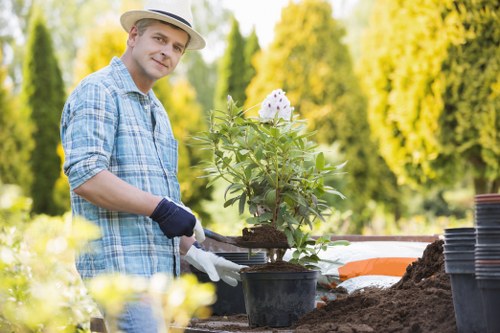 Policy Statement: We are committed to providing a safe workplace. Our approach is to identify hazards, assess the level of risk, implement proportionate control measures and monitor their effectiveness. Everyone engaged in our Chislehurst gardening operations has a duty to follow safe working practices and to report unsafe conditions without delay.
Responsibilities and Organisation
Management responsibilities: The management team is responsible for ensuring that risk assessments are undertaken, safe systems are developed, adequate training is provided and that all equipment is maintained. Management will allocate resources to support health and safety and will review this policy at regular intervals.
Employee and contractor duties: All personnel, including subcontractors, must take reasonable care for their own safety and for the safety of others affected by their actions. Staff will follow instructions, use provided personal protective equipment, and participate in training. Chislehurst gardeners and operatives must report incidents and near misses promptly.
 Key contacts and communication: Clear lines of communication will be maintained between supervisors, operatives and clients. Important safety information will be communicated before and during work using briefings, signage and documented instructions.
Risk Assessment, Training and Competency
Risk assessments: Before work begins, site-specific risk assessments will be completed to identify hazards such as uneven ground, buried services, overhead cables, pesticide use and public access. Control measures will be selected to eliminate or reduce risk to an acceptable level.
Training and competency: Staff will receive induction and ongoing training relevant to their role. Training covers machinery operation, safe use of handheld tools, manual handling, working at height for certain tasks, and safe handling of chemicals. Records of training and competency checks will be kept and reviewed.
Safe systems of work: Safe work methods will be developed for common operations. These will outline required PPE, exclusion zones, traffic management and procedures for working near pedestrians. Supervisors will ensure adherence to these procedures at all times.
Equipment, Vehicles and Personal Protective Equipment (PPE): All equipment will be maintained to safe standards and inspected regularly. Vehicles used for transportation of tools and machinery must be roadworthy and loaded safely. Operatives must use appropriate PPE such as gloves, eye protection, hearing protection, hi‑vis clothing and safety footwear as required for the task.
Control of hazardous substances: Use of pesticides, herbicides and other chemicals will follow manufacturer guidelines and safe application procedures. Chemical storage, transport and disposal will be managed to minimise environmental and health risks. Material Safety Data Sheets will be made available for all substances used.
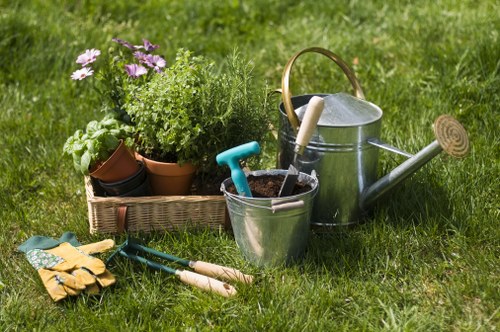 Manual handling and machinery: Tasks involving lifting and handling will be assessed and mechanical aids used where practical. Operators of powered machinery will be trained and authorised. Machines will be used with guards in place and switched off when being cleaned or serviced.
Emergency procedures and incident reporting: Emergency arrangements include procedures for first aid, fire and major injury. First aid kits will be accessible at sites and operatives will know how to contact emergency services. All accidents, incidents and near misses will be recorded, investigated and acted upon to prevent recurrence.
Environmental and public safety considerations: Work will be planned to protect the environment and local amenity. Waste management, dust suppression and contamination prevention are integral to our operations. When working in public areas or on client properties, appropriate signage and barriers will be used to protect passers-by and property.
 Monitoring, review and continuous improvement: This policy will be reviewed at least annually or after a significant incident, change in work activities or legislative update. Performance will be monitored through site checks, audits and review of incident statistics. Improvements will be implemented where gaps are identified. We aspire to a culture of continuous improvement and shared responsibility for safety across all our gardening services.
Conclusion: Our commitment to health and safety underpins every task carried out by our team. By maintaining clear responsibilities, robust risk assessments, competent personnel and sound operational controls, we strive to deliver safe, reliable and professional gardening services across the area while protecting people, property and the environment.